The right tool for the job. Sometimes that’s AI.
We use AI where it makes the work faster, sharper, and cheaper. We leave it out where a human hand is the whole point. Every project gets a technology read before we touch a single tool.
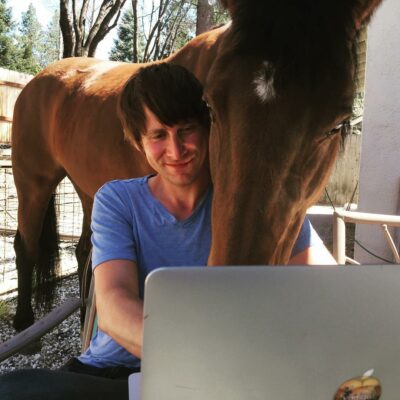
AI is a tool. The judgment is still ours.
The hype says pick a side: go all-in or hold out. We don’t. We treat AI like any other tool in the shop: right for some jobs, wrong for others, never the point.
What never changes is who’s accountable for the result. A person, with their name on it, the same hands start to finish. The machine speeds up the work. It doesn’t get to decide what good looks like.
Every project gets a technology read.
Before a single tool is chosen, we look at the work: what’s at stake, how much of it there is, and how original it needs to be. Then we tell you which of three ways fits, and why.
AI-accelerated
Fast, scalable, low cost.
Best for
High-volume, repeatable, first-draft work.
- Variations at scale
- Quick research passes
- Production speed over polish
Hybrid
AI does the heavy lifting. Humans do the heavy thinking.
Best for
Most work. One big idea, many assets.
- Human strategy, AI production
- Reviewed at every step
- Speed without the sameness
Human-only
No AI. Original, by hand.
Best for
Brand-defining, high-stakes, sensitive work.
- Pure craft and judgment
- When a machine would flatten it
- Zero training-data exposure
Not sure which fits? That’s part of the free hour.
What it actually speeds up.
Research & synthesis
Reading the market, the competitors, and the reviews in hours instead of weeks.
First drafts & variations
Twenty directions to react to by Tuesday, so we skip the blank page.
Image & asset production
Resizes, cleanups, and on-brand variations at the volume real launches need.
Transcription & summaries
Every call captured and distilled, so nothing said in the room gets lost.
Code scaffolding
The boilerplate written fast, so the hours go to the parts that are actually hard.
Localization
First-pass translation and adaptation, then a human makes it sound human.
Where a human stays in the lead.
The machine speeds up the work. It doesn’t get the parts that decide whether the work is any good.
Strategy & judgment
What the move actually is, and what to ignore, is a call, not a prompt.
Taste & craft
The difference between fine and unforgettable is still a person's eye.
Relationships
The room, the trust, the hard conversation. No model sits in that chair.
Accountability
A real name on the result. If it's wrong, a human owns it and fixes it.
You can opt out of AI entirely.
No hidden automation, no training on your work, no exceptions you didn’t sign off on. Four promises we hold on every project.
We tell you what tools touched your work. No hidden automation.
Your data and brand assets never go into public models for training.
Say “no AI” and we honor it, start to finish.
If AI can't be used safely (IP, privacy, ownership), we don't use it.
The AI questions, answered straight.
Sometimes. We use AI where it makes the work faster, sharper, or cheaper without costing quality. We leave it out where a human hand is the whole point. Every project gets a technology read before we choose any tool, and we tell you what we're using and why.
Yes. You can ask for a fully human-only engagement and we'll honor it, end to end. Some work we'd recommend that anyway: brand-defining, high-stakes, or sensitive projects.
We look at three things: what's at stake, how much of the work there is, and how original it needs to be. High-volume, repeatable work leans AI-accelerated; most projects land in a hybrid where humans lead the thinking and AI handles production; brand-defining or sensitive work stays fully human. We show you the recommendation and the reasoning before we start.
That's exactly what we guard against. AI is production help, not the creative direction. The strategy, the taste, and the final call are always a person's, so the output looks like you, not like everyone else who typed the same prompt.
Your work stays yours. We don't feed your data, brand assets, or private materials into public models for training. When a project touches anything sensitive, we use tooling that keeps it contained, or we don't use AI at all.
Often, yes. When AI removes hours of repetitive production, that shows up in the scope and the price. But we don't use AI just to cut a number; we use it where it genuinely serves the work. Pricing is always tied to the move, not to which tools we happen to use.
A person, with their name on it. The same operators, start to finish. AI doesn't get the final say on anything that ships. If something's wrong, a human owns it and fixes it.
Research and synthesis, first drafts and variations, image and asset production at volume, transcription and summaries, code scaffolding, and first-pass localization. In short: the heavy lifting that used to eat the hours that should go to thinking.
Strategy and judgment, taste and craft, the relationship, and the final call. The parts where a machine would flatten the work, or where accountability has to sit with a human: those stay human.
Always. You'll know which parts of the work were AI-accelerated and which were done by hand. No hidden automation, no pretending a model was a person.
We're careful here. For anything that needs clear ownership (logos, core brand marks, signature creative), we lean human-only or human-finished so the result is defensibly yours. Where AI is used, we stick to tooling and practices designed to keep your rights clean.
For the right project, yes. A brand-trained image or content model can make on-brand production dramatically faster. We'll tell you honestly whether the volume justifies it, and keep the model and its data yours.
Not sure where AI fits? Let’s read the project.
Tell us what you’re building. The first hour is free, and you’ll leave with a straight answer on where AI helps, where it doesn’t, and what it’ll take.